What should I expect when I visit?
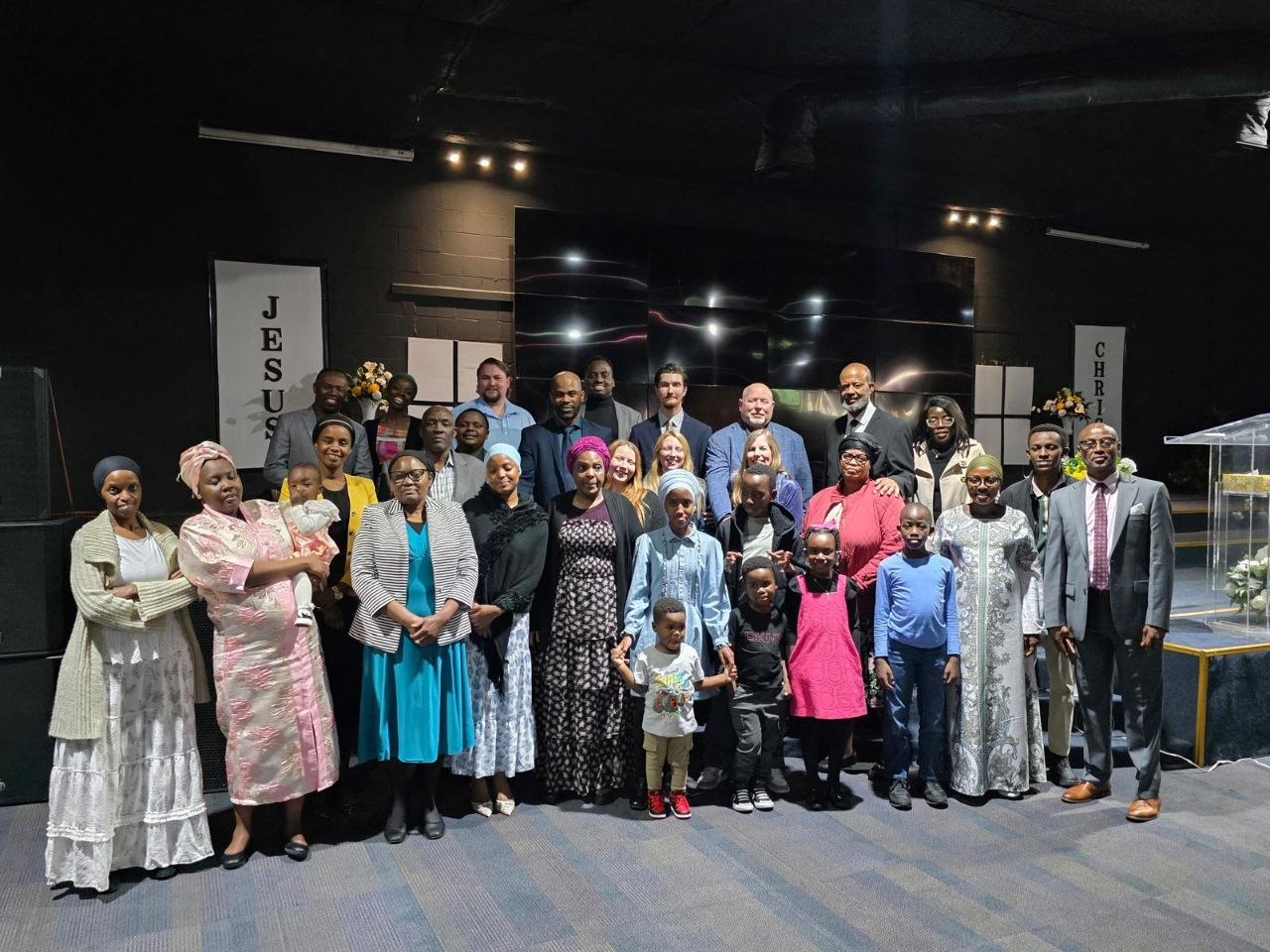
Expect a scripture-centered gathering with worship, teaching, prayer, and warm fellowship. Visitors are welcome to ask questions before or after service.
Where do I find sermons and teachings?
Recent sermons are published on the sermons page with categories, dates, speakers, summaries, and detail pages for deeper reading.
Wasn't Torah just for the Jews?
Scripture says otherwise.
There were no "Jews" until Jacob's son Yehudah (Judah) founded the Tribe of Judah (Genesis 29:35; Matthew 1:1-2). "Jews" eventually became shorthand for all Israelites, but technically only descendants of Judah's tribe can rightly claim that title. The Tanach calls His chosen people Hebrews (Genesis 12-14). Abraham himself was born a Gentile in Ur of the Chaldees, Babylon, and became a Hebrew, one who "crosses over," when he physically left Babylon and spiritually surrendered to Adonai's will.
So when Elohim made the Seventh Day holy (Genesis 2:2-3), He wasn't speaking exclusively to "the Jews." Adam and Eve weren't Jews. Cain and Abel, who brought the first sacrifices (Genesis 4:3-5), weren't Jews. Noah, also not a Jew, already knew the difference between clean and unclean animals (Genesis 7:2-3) and clearly understood a seven-day cycle. A Torah for all humanity existed long before Sinai, long before the tribe of Judah was even born.
This directly challenges the common Christian claim that Torah (often mistranslated as mere "law") no longer applies. Anyone who claims the God of Abraham, Isaac, and Jacob as their own is called to Torah observance Hashem states this four times in a row in Numbers 15:13-16. Jeremiah 31:31-32 reaffirms it within the New Covenant made with both the House of Israel and the House of Judah, both Torah-observant. Exodus 12:49, Numbers 15:13-16, Isaiah 56:6, and Romans 10:12-13 all confirm the same truth.
So, what did you think Torah was actually for?
How are events published?
Upcoming events are listed on the events page with date, time, location, and details.
Can I submit prayer requests online?
For now, contact the church directly through the listed phone or email.
What is murder?
The answer is found under "The sixth commandment" https://cogmersusa.org/sermons/you-shall-not-murder
Who was A N Dugger
Andrew N. Dugger and the Church of God (Seventh Day)
From a Nebraska Homestead to the African Mission Field
Introduction
Andrew Nugent Dugger (1886–1975) is usually described as the most prominent leader of the Church of God (Seventh Day) in the twentieth century. He edited its paper, debated its critics, co-wrote its best-known history and, late in life, directed a mission from Jerusalem that planted congregations in Nigeria and Kenya. Most writing about him dwells on the church divisions of 1933 and 1950. This article follows a different thread: how a Nebraska schoolteacher, working largely through the printed page and a few trusted co-workers, helped establish Sabbath-keeping churches in Africa. It draws on denominational histories and the history published by the Church of God 7th Day (COGMERs) in Nairobi, which preserves the testimony of a participant, Bishop Hezekiah Kuria Karanja.
Early Life and Family
Dugger was born on 19 November 1886 in Bassett, Rock County, Nebraska. His religious inheritance came from his father, Alexander F. Dugger Sr., a minister who began in a Sunday-keeping church. According to the church’s own history, his denomination asked him to write a study refuting the Bible Sabbath. The research persuaded him of the opposite, and he published a defence of the Sabbath. The elder Dugger entered the full ministry of the Church of God in 1874 and served as vice president when the General Conference was organized on 5 October 1884. He became sole editor of the Bible Advocate in 1905, gave up the editorship in 1909 because of poor health, and died in 1910.
The younger Dugger grew up inside this world of Sabbath controversy and print. He taught school, homesteaded cattle and hay land with his brother Alexander Jr., and was taught to tithe. He received his ministerial license in 1906 at the Church of God camp meeting in Gentry, Missouri. Two other episodes shaped him. The first was a vision of light that, after his father’s death, seemed to move toward Jerusalem, an image that later gave his missionary vision its direction. The second was his marriage. He first proposed in 1911 to Effie Carpenter, but they married only on 28 May 1925, after she had been healed in a meeting held by Dugger and the evangelist Milton Grotz and had joined the church. Effie became his lifelong partner in the work, writing a column on life in Israel for the family magazine.
Editor, Organizer and Debater
In 1913 Dugger was elected to the General Conference’s Executive Committee. In 1914 he sold his livestock and land, cleared a press debt of about $5,000, and moved to Stanberry, Missouri, to take over the Bible Advocate. He also studied theology and public speaking at the University of Chicago, and later tradition credits him with Greek, Hebrew and German. A policy of routing tithes through state conferences, introduced after a 1922 survey, lifted General Conference income above $18,000 in 1923, giving the denomination resources for wider work.
His public reputation came from debate. The best known exchange, with the Church of Christ minister W. Curtis Porter, was later published as a book of over 230 pages. His most influential book was The Bible Home Instructor (1919), a doctrinal manual in question-and-answer form that historians credit with raising membership in the 1920sIt also became a missionary tool, and Kenyan churches still circulate a Swahili translation.
Debating shaped his method as well as his fame. In a ten-night debate at Canadian, Oklahoma, in 1921, Dugger is said to have played weak on a key text until his opponent staked a $1,000 wager on the meaning of the word “rest” in Hebrews 4:9. He had already obtained a letter from a university Greek professor confirming that the underlying word meant a keeping of the Sabbath, and he won the exchange, although his opponent reportedly refused to pay. The anecdote shows a habit that later served his mission work: prepare the evidence in writing and send it ahead.
Collaboration with C. O. Dodd
The best-documented literary partnership of Dugger’s career was with Clarence O. Dodd (1899–1955). In 1935 the two published A History of the True Church, tracing Sabbath-keepers from apostolic times to the modern era. Dodd was a Methodist Bible class teacher who accepted the Sabbath after receiving a tract in Salem, West Virginia, and who became editor of the Salem Bible Advocate after the 1933 division. The same note observes that Dodd probably wrote the larger share of the book, a caution for anyone who attributes it to Dugger alone. Dodd was also among those chosen by lot for the seventy in November 1933, the year Dugger was chosen as one of the seven.
Division, Jerusalem and the Turn to Missions
In 1931 the General Conference voted to establish a world headquarters in Jerusalem, and Dugger left Stanberry on 3 October with his family to prepare the ground. He returned in October 1932 and settled in Sweet Home, Oregon. At the 1933 Stanberry conference his proposal for a church organized as twelve, seventy and seven split the denomination, and his group reorganized at Salem, West Virginia, naming Jerusalem as its world headquarters. After the 1949 merger Dugger was elected one of the seven in charge of foreign missions, but in March 1950 he helped start a “Back to Salem” movement against the union. Whatever the merits of those quarrels, the sources show that his commitment to Jerusalem and to foreign work ran through all of them.
Nigeria and the Move to Jerusalem
Dugger’s first major African venture was in Nigeria. The date is uncertain. The Journal places a family missionary trip in 1950, while Makokha dates his return from an extended Nigerian trip to September 1952. Both describe a trip made with Elder A. C. Olson of Wisconsin and five local ministers, travelling by bicycle among groups of converts. Soon afterwards the family contracted typhoid. Effie nearly died, and Dugger vowed that if she recovered he would go to Jerusalem to publish a paper there. According to the family tradition she recovered, and in 1953 they settled permanently in Jerusalem and launched the Mount Zion Reporter.
Reaching Africa Through the Printed Page
From Jerusalem Dugger built an operation that reached the world largely by post. He set up a press in a Jerusalem suburb and opened a congregation near the Old City. A church history written from the perspective of the African and Caribbean movement credits him with over 150 tracts and books, including correspondence Bible lessons, the Mount Zion Reporter (also called the Judah Magazine), Sabbath lesson quarterlies and the Jerusalem Messenger. Caribbean churches read an article from the Reporter aloud each Sabbath. By June 1972 the Israel Bible Correspondence School, managed by Elder Harry Schlenker, had sent forty-four lessons in seven languages. For readers in Africa, where trained ministers were scarce, doctrine could arrive before any missionary did.
The mission strategy was deliberate. Church histories written from the African and Caribbean side say Dugger was commissioned in 1931 to build a world headquarters whose attention would fall on foreign countries rather than North America, and that the press in Jerusalem was how that aim was carried out. In practice it meant sending literature first, answering letters, and dispatching a visiting elder only when a group of readers had formed.
Kenya: Correspondence, Shoemaker and the 1970 Baptisms
Dugger’s Kenyan work began by post. His tracts and the Reporter reached Kenya by several routes, including missionaries working in colonial prison services, and readers who found a mailing address on the back wrote to Jerusalem. One such reader, Munene Kihara, obtained tracts at Eldoret in 1967 and shared them with a group in Githiga, Murang’a, that included the young Seventh-day Adventist deacon Hezekiah Kuria Karanja and the elder Kimani Kiano. Dugger gave this group a list of his other Kenyan correspondents so that they could prepare readers for a visit, and they asked him to send a minister to baptize them.
Dugger sent Elder Andy Marion Shoemaker, who arrived in August 1970, on the 7th according to COGMERs. He landed unannounced, but the name of Kimani Kiano brought him help from Kiano’s brother, a government official, and a bus to Githiga. There the language barrier was overcome by Karanja, then about twenty-three, who stayed with Shoemaker as his interpreter throughout the tour. Shoemaker taught, prayed for the sick, and baptized and ordained at Ol Karau, at Limuru and at Githiga. The totals are given as about 300 baptisms and nineteen ordinations in the COGMERs history, which counts the Limuru and Githiga ordinations in addition to the sixteen. He returned to Israel in October 1970 and died, on 23 March 1980 at the age of 74.
Nyambura Kimani, known as Wa-Ngenye, remembered being the first believer to receive the visitor and sending for Karanja because he could communicate in English. Karanja was also a youth leader, and he organized young people for prayer and fellowship with Shoemaker each evening. At Limuru Shoemaker visited an Akorino congregation at Kimende and baptized new converts at the Bathi river. These details show that the 1970 baptisms were not a single event but a series of gatherings built on a network already formed by letters.
After Dugger
After Shoemaker left, Jerusalem continued to send Bible lessons, tracts, calendars and Judah magazines, and the Kenyan believers learned festival observance and church administration from them.H. K. Karanja and the late Muigai Ng’ang’a travelled widely holding open-air meetings, and many congregations were opened. Dugger died on 2 November 1975; his son-in-law Gordon M. Fauth took over the Jerusalem church and Effie became editor of the Reporter. Without Dugger, support from Jerusalem dwindled. By the 1980s disputes over feast-keeping and over dreams and visions had produced splinter groups, a pattern also visible in William Heuer’s visit to Mona, Molo, where an ambiguous reply about the feasts deepened division.
Dugger had also entrusted the Caribbean, Africa and a few American churches to the oversight of William Heuer of Yakima, Washington, who travelled widely but whose death in 1994 removed one of the few remaining links with the Jerusalem work.
In 1991 the group led by Karanja acquired a plot in Eastleigh Section 3, Nairobi, which became the headquarters of COGMERs. The church today reports over 200 branches and more than 300 leaders, with congregations in Tanzania, Uganda, Malawi ,South Africa and USA The Journal reports that Dugger’s missions produced thousands of members in Kenya, Nigeria, India and Jamaica.
Conclusion
Dugger’s African legacy rests less on journeys than on literature, correspondence and a few people willing to act on it. A Nebraska homesteader’s son became a press-based missionary whose tracts crossed borders on their own, and whose single Kenyan delegate, Shoemaker, met a ready community through the work of readers such as Macharia, Kihara, Kiano and Karanja. The surviving evidence is uneven. The Kenyan accounts offer valuable eyewitness detail but are church-written and sometimes disagree on dates and numbers. The next step for a scholarly version is to place them beside Dugger’s own periodicals, the Mount Zion Reporter and the Jerusalem Messenger, and to record interviews with surviving participants before the oral record is lost.
Primary Sources and Leads to Pursue
• Jerusalem Messenger, vol. 10 (Chislev/December 1970): likely report of Shoemaker’s Kenyan tour (cited by Makokha).
• Mount Zion Reporter, especially Aug. 1972 and Aug. 1976
• Dugger, “What Started Us to Israel” (tract), for the 1952–53 account.
• Bible Advocate (Stanberry and Salem lines), 1914–1950, for Dugger’s editorial and missionary reports.
• Richard C. Nickels, History of the Seventh Day Church of God (giveshare.org), and the Nigeria material noted at friendsofsabbath.org.
• COGMERs: request recordings or transcripts of the Karanja and Macharia interviews; interview Wa-Ngenye (Nyambura Kimani) and other Githiga participants if living.
• Letters between Dugger and Kenyan correspondents (Macharia, Kihara, Kiano, Karanja),held by COGMERs or by the Fauth family in Jerusalem.
Church of God 7th Day, Kenya blog. “Who We Are” (2 Feb. 2011); “Mkufunzi wa Biblia Nyumbani” (31 Dec. 2012).
“Church of God Adventists.” Encyclopedia.com.
Reformed Reader. “About the Authors,” in Dugger and Dodd, A History of the True Church. reformedreader.org/history/dugger/authors.htm.
Giving & Sharing / friendsofsabbath.org. “A.N. Dugger and the Jerusalem World Headquarters of the Church of God, Seventh Day.”
“A.N. Dugger congregation is back after almost 20 years.” The Journal, Issue 101 (thejournal.org).
“Andrew N. Dugger” and “Church of God (Seventh Day).” Wikipedia (used for cross-checking dates only).
No questions match that search. Try other words, or ask us directly.
We are here for you
Still have questions?
We would love to hear from you. Reach out anytime.